How to Fix Christmas Light Strings: Easy Step-by-Step Guide
Start With The Fuse, Not The Bulbs
A dark string of Christmas lights feels like a needle-in-a-haystack problem, but it usually isn't. Most failures come down to one of four things, and you can rule them out in order in about ten minutes. Grab the string, unplug it, and work through this list.
Step 1: Check The Fuse
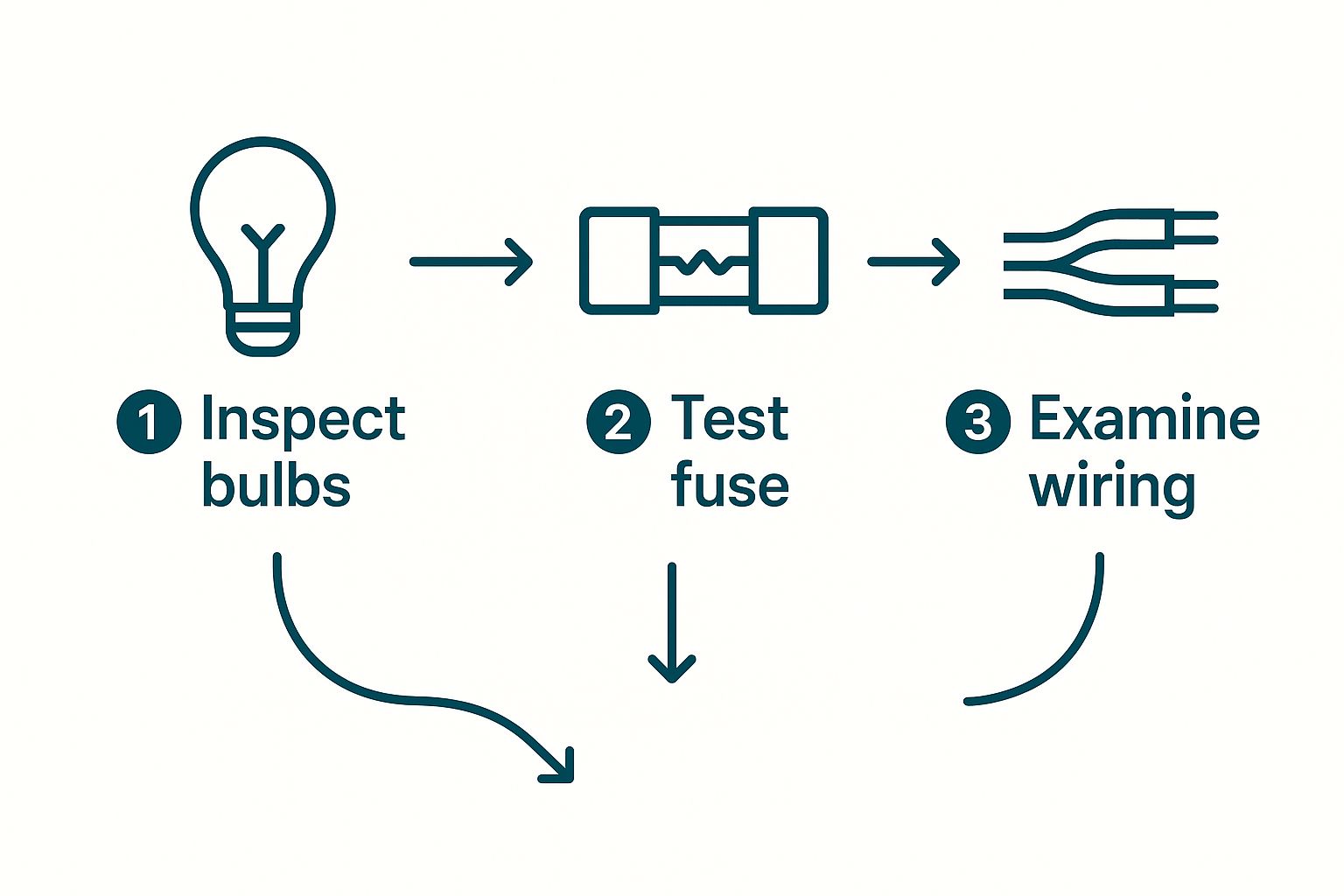
If the entire string is dark, the fuse is the first suspect. Slide open the little door on the male plug and you'll find one or two small glass fuses. Hold each up to the light: an intact fuse has an unbroken wire inside; a blown one is dark or has a visible gap. Replace with the spare fuse taped inside most plug doors or with the same amperage rating printed on the plug. If a new fuse blows immediately, you have too many strings connected end to end — split the load across two outlets.
Step 2: Look For The Obvious
Run the string through your hands. You're looking for a bulb that's cracked, missing, or sitting crooked in its socket, a socket with a loose wire, or a section of insulation that's been chewed, cut, or crushed. Push any loose bulb firmly back into its socket. A single bulb not fully seated will take out a whole section on many string types.
Step 3: Find The Bad Bulb In A Dark Section
If half the string works and half doesn't, one bulb in the dark section has failed and broken the circuit. You can check bulbs one at a time from the last working bulb forward, but a non-contact voltage tester makes it fast: run it along the wire and the spot where it stops beeping is where the current stops. That's your bad bulb or socket. We show the exact technique here: How To Easily Find Bad Christmas Light Bulbs.
For LED strings, the LED Keeper Pro goes a step further: it pinpoints the failed bulb and can bridge it so the rest of the section lights again while you source a replacement.
Step 4: Replace The Bulb Correctly
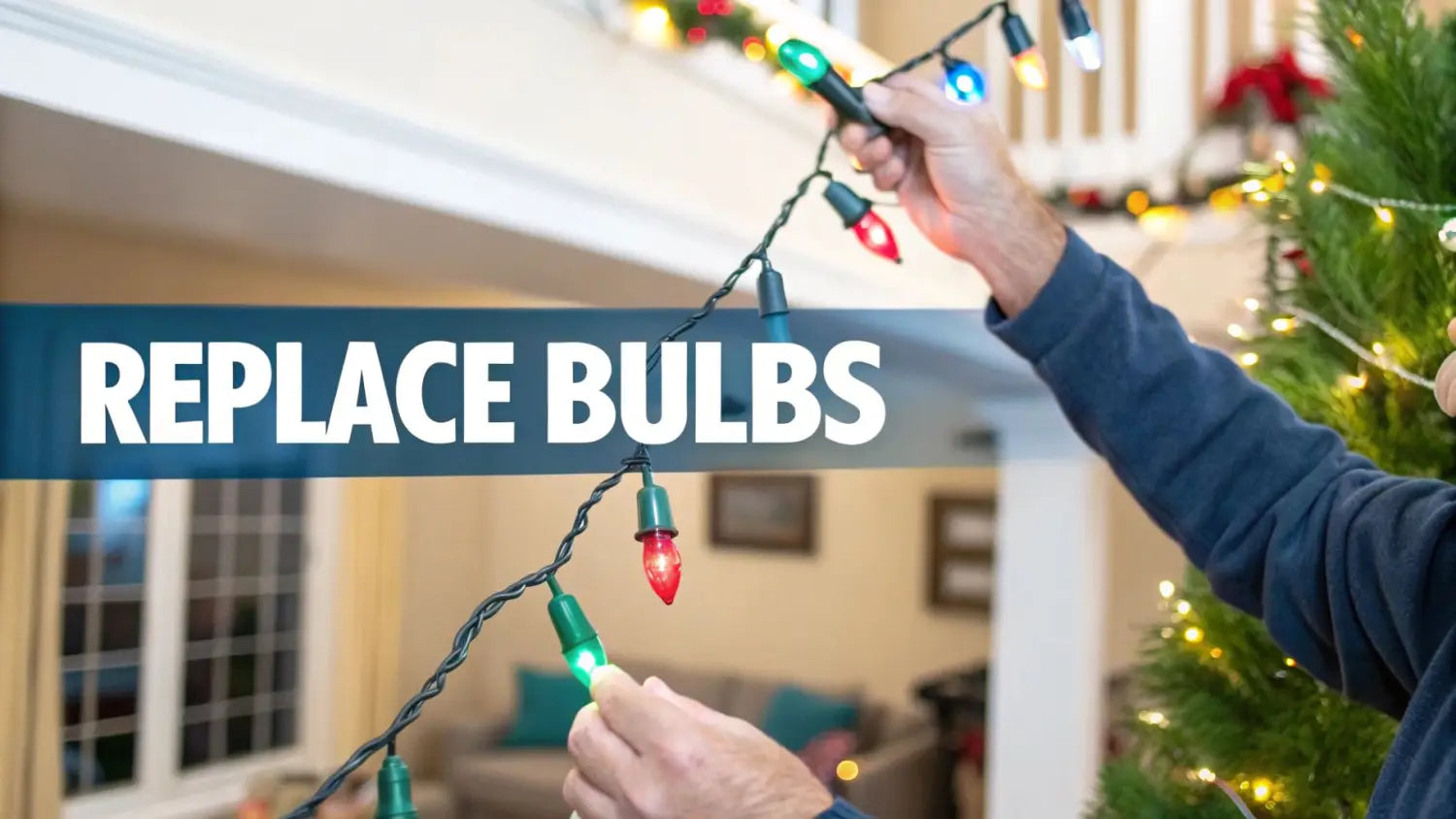
Match the replacement to the string: same lens style, same color, and critically the same voltage. A bulb rated for a 50-count string will burn out fast in a 100-count string, and vice versa. Unplug first, pull the old bulb straight out (base and all on mini lights), seat the new one until it clicks, and plug in to test. C7 and C9 screw-in bulbs are the easy case: unscrew, screw in, done.
Step 5: Fix Loose Sockets And Damaged Wire
A socket that's lost its grip can often be tightened by gently squeezing the contact tabs inside with small pliers. Damaged insulation is a different matter: a nick can be wrapped in electrical tape as a temporary fix indoors, but any string with exposed copper, melted plastic, or a crushed section should be retired. Repairing wire on a light string is not worth the fire risk.
Flickering And Dimming
Flicker usually means a loose bulb or a corroded contact somewhere in the string. Reseat every bulb in the affected section and clean any green or white corrosion from socket contacts with a pencil eraser. Dimming toward the end of a long chain means too many strings connected in series; break the chain and feed the second half from another outlet.
Pre-Lit Tree Lights
Pre-lit trees use the same string technology, so the same steps apply, with one addition: check the connectors between tree sections first. They loosen every time the tree is assembled. Unplug, reseat each section plug firmly, then troubleshoot the individual string.
When To Stop Repairing
If more than a few bulbs have failed in one string, if the wire is stiff, cracked, or discolored, or if fuses keep blowing with a single string plugged in, replace it. Old incandescent sets in particular reach a point where every fix reveals the next failure. Professional-grade LED strings avoid most of this: individually replaceable bulbs, sealed sockets, and heavier wire, backed by our Reindeer Proof™ Warranty.
Prevent Next Year's Problems
Test every string before it goes up. Protect outdoor connections with weatherproof plug gaskets. At takedown, test again, replace anything weak, then coil each string around a piece of cardboard or a reel and store in a dry bin. Most "dead" strings in December were actually killed by a tangled bag in the attic.
Frequently Asked Questions
Why did half my string go out?
One failed or unseated bulb in that half broke the circuit. Find it with a voltage tester or by checking bulbs from the last lit one forward.
Can I use any bulb as a replacement?
No. Match the lens style and, most importantly, the voltage rating for your string's bulb count.
Is it safe to tape a damaged wire?
Only as a short-term indoor fix on a small nick. Exposed copper or melted insulation means the string should be replaced.
Tools And Replacements
Find testers, the LED Keeper Pro, and spare bulbs in our Christmas light repair tools collection, or start fresh with professional-grade LED string lights backed by our Reindeer Proof™ Warranty.