Christmas Light Recycling: How to Responsibly Dispose of and Upgrade Your Old Lights
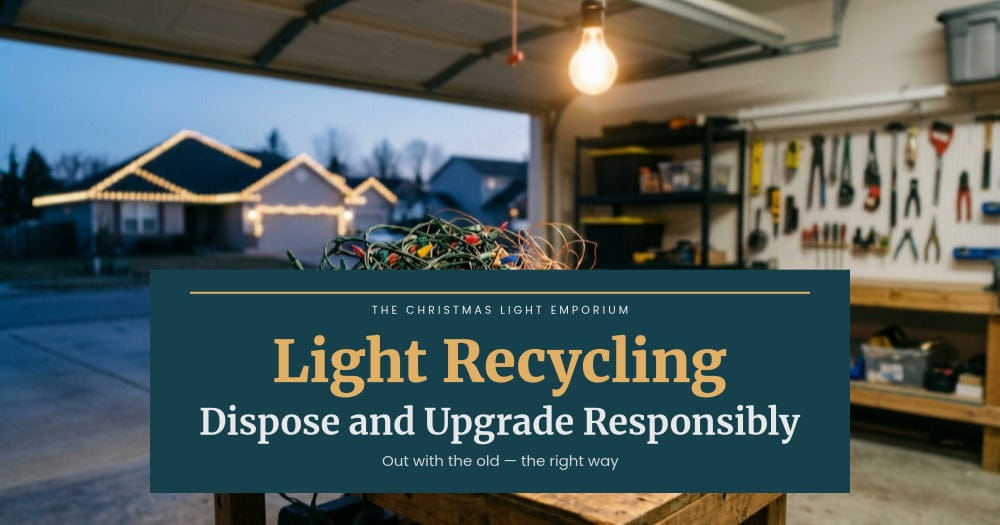
Every January, millions of homeowners face the same quiet dilemma: what to do with that tangle of old Christmas lights stuffed in a box since who-knows-when. Tossing them in the trash feels wrong. Throwing them in the recycling bin seems logical — but it's actually one of the worst things you can do. Those wires jam sorting machinery at recycling facilities, causing expensive shutdowns. So what's the right move?
Why Christmas Lights Don't Belong in Your Trash or Curbside Bin
Christmas light strands are classified as electronic waste. They contain copper wiring, glass, plastic coatings, and in older sets, trace amounts of lead and mercury. Landfills aren't designed to handle these materials safely, and standard curbside recycling programs can't process them — the tangled wires wrap around conveyor belts and shred gears. It's a surprisingly expensive problem for municipal recycling centers.
The copper inside those old strands, though? That's genuinely valuable. A single strand of 5mm LED Christmas lights contains enough recoverable copper to matter when recycled at scale. Multiply that by every household in your neighborhood, and you start to see why proper recycling channels exist.
Where to Recycle Christmas Lights the Right Way
Several options exist, and most of them are free:
- Retail drop-off programs — Home Depot, Lowe's, and Ace Hardware stores often accept old light strands during the holiday season. Some run them year-round.
- Municipal e-waste events — Most counties host periodic electronics recycling days. Christmas lights qualify. Check your local government website for schedules.
- Mail-in recycling — Organizations like HolidayLEDs.com accept shipped strands. Pack them in the smallest box you can manage to keep shipping costs down.
- Scrap metal yards — If you've accumulated a serious volume, your local scrap yard will often buy copper-bearing wire by the pound.
Wherever you recycle, remove any non-light accessories first — timers, extension cords, and power strips should be recycled separately.
When Recycling Isn't the Answer: Reuse and Donate
Not every strand headed for the box is actually broken. Before recycling, test your lights. A tool like the LED Keeper PRO can diagnose and fix dead sections in LED strands in minutes — often it's a single failed bulb causing a whole section to go dark. For individual bulb replacements, LED Keeper Repair Pods handle the fix cleanly.
If the strand works but you've simply upgraded your display, donate. Local thrift stores, churches, and community theaters gladly accept working Christmas lights. One person's outdated warm white set is another person's first real holiday display.
Upgrading From Incandescent? Here's What to Know
If you're recycling because you're finally making the switch from incandescent to LED — good timing. Modern LED Christmas lights use roughly 80% less energy and are engineered to last for many seasons. That's not just an environmental win; it's a financial one.
For roofline displays, professional-grade C9 warm white faceted ProCore® LED bulbs deliver the classic look with fraction-of-the-cost energy draw. Pair them with C9 stringers in white wire or 100-foot C9 stringers for clean roofline coverage.
Prefer the multicolor look? The C9 multicolor faceted set delivers saturated, consistent color across every bulb — something incandescents could never guarantee after the first season.
For tree wrapping and bushes, 5mm cool white LED mini lights or 5mm multicolor LEDs give you tight, even coverage without the heat concerns that made wrapping trees with incandescents a genuine fire risk.
Building a Display That Won't Need Recycling Anytime Soon
The best recycling strategy is needing to recycle less often. That starts with buying lights engineered for durability rather than disposability.
C7 warm white smooth ProCore® LED sets and C9 warm white smooth sets are built with commercial-grade components — the same hardware used by municipalities, zoos, and event venues running lights through harsh weather season after season. ColorCraft® Champagne sets combine warm white, pure white, and cool white in a single strand for a sophisticated layered look.
Proper installation hardware matters too. TuffClips wedge clips and shingle tab clips keep bulbs secure without damaging roofing materials — and they prevent the wind-blown strand damage that sends lights to the recycling bin prematurely.
The Environmental Math: Why This Matters
The EPA estimates Americans throw away roughly 100 million pounds of Christmas-related waste each year, and old light strands make up a meaningful chunk. The copper alone — if properly recycled — represents millions of dollars in recoverable material. More importantly, keeping those strands out of landfills prevents heavy metals from leaching into groundwater over decades.
Switching to warm white LED rope light for permanent patio and landscape installations eliminates the annual cycle of buying disposable strands entirely. For seasonal accent work, C6 warm white LEDs and G12 warm white LEDs offer specialty shapes that hold up for many holiday seasons.
Frequently Asked Questions
Can I put Christmas lights in my regular recycling bin?
No. Christmas light strands tangle in sorting machinery and can shut down recycling equipment. Always use dedicated e-waste recycling programs, retail drop-off events, or mail-in services.
Do LED Christmas lights last longer than incandescent?
Yes — significantly. LED Christmas lights use about 80% less energy and are built to last for many seasons of outdoor use, while incandescent bulbs typically burn out within one to three seasons.
Is the copper in Christmas lights worth recycling?
Absolutely. Copper is one of the most valuable recyclable metals, and it's present in virtually every Christmas light strand. Scrap yards will sometimes pay for bulk quantities of copper-bearing wire.
What should I do with broken Christmas lights?
Broken strands should still be recycled through e-waste channels — never thrown in the trash. If only a section is dead, a repair tool like the LED Keeper PRO may be able to revive it before you write it off.
Can I donate old Christmas lights?
If the lights still work, absolutely. Thrift stores, churches, community theaters, and Habitat for Humanity ReStores often accept working Christmas light strands.
How do I know when it's time to replace my Christmas lights?
Flickering sections, frayed wiring, cracked sockets, and lights that no longer hold a consistent color are all signs it's time. When you do replace, consider upgrading to commercial-grade C9 LED bulbs or 5mm LED mini lights built for long-term durability.
About The Christmas Light Emporium
The Christmas Light Emporium has been helping homeowners and commercial decorators build stunning holiday displays since 2015. We carry professional-grade LED Christmas lights, C7 and C9 bulbs, stringers, clips, controllers, and everything else you need to create a display that lasts — and looks incredible doing it.
Ready to upgrade your display with lights built to last? Shop The Christmas Light Emporium and see the difference professional-grade makes.